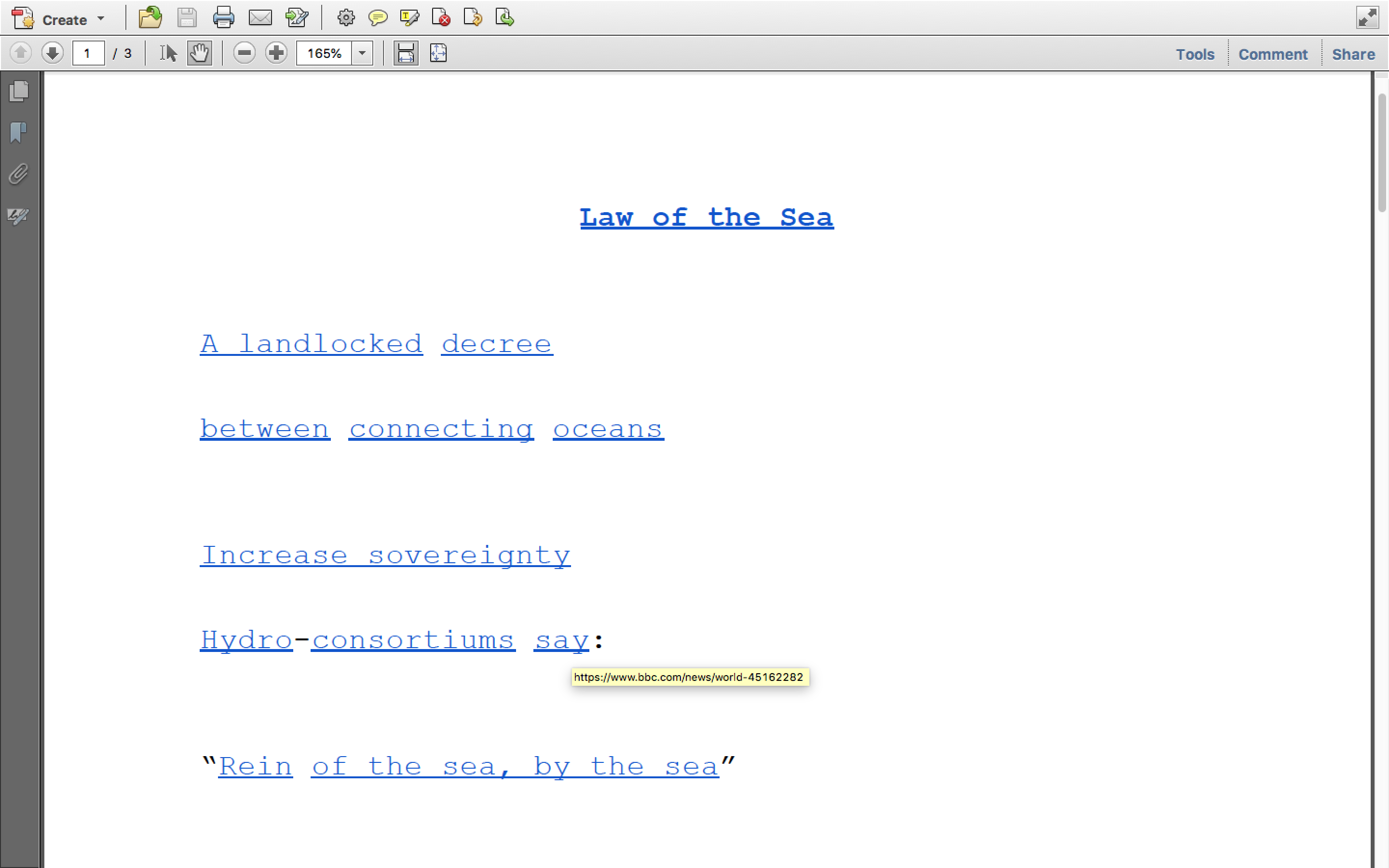
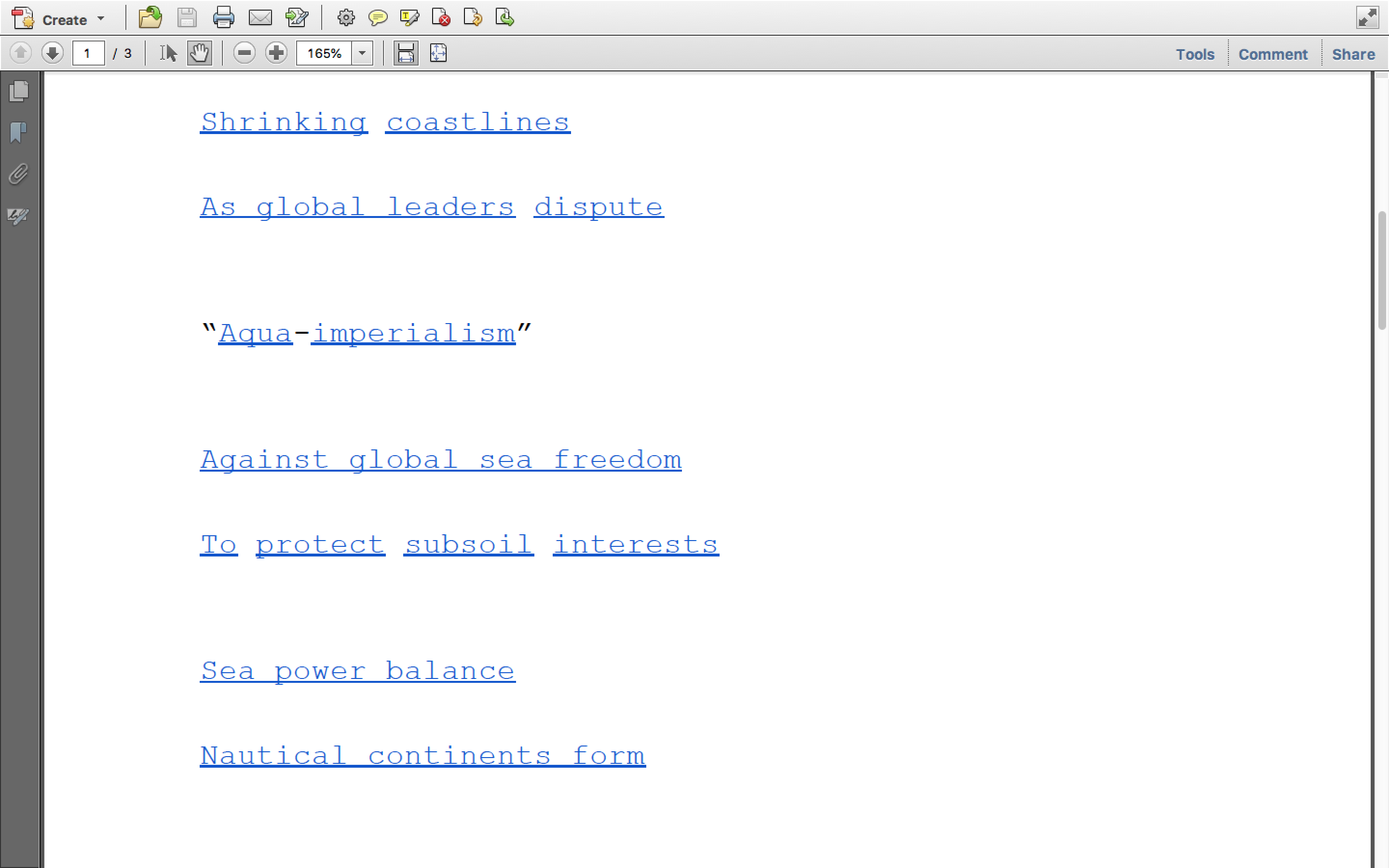

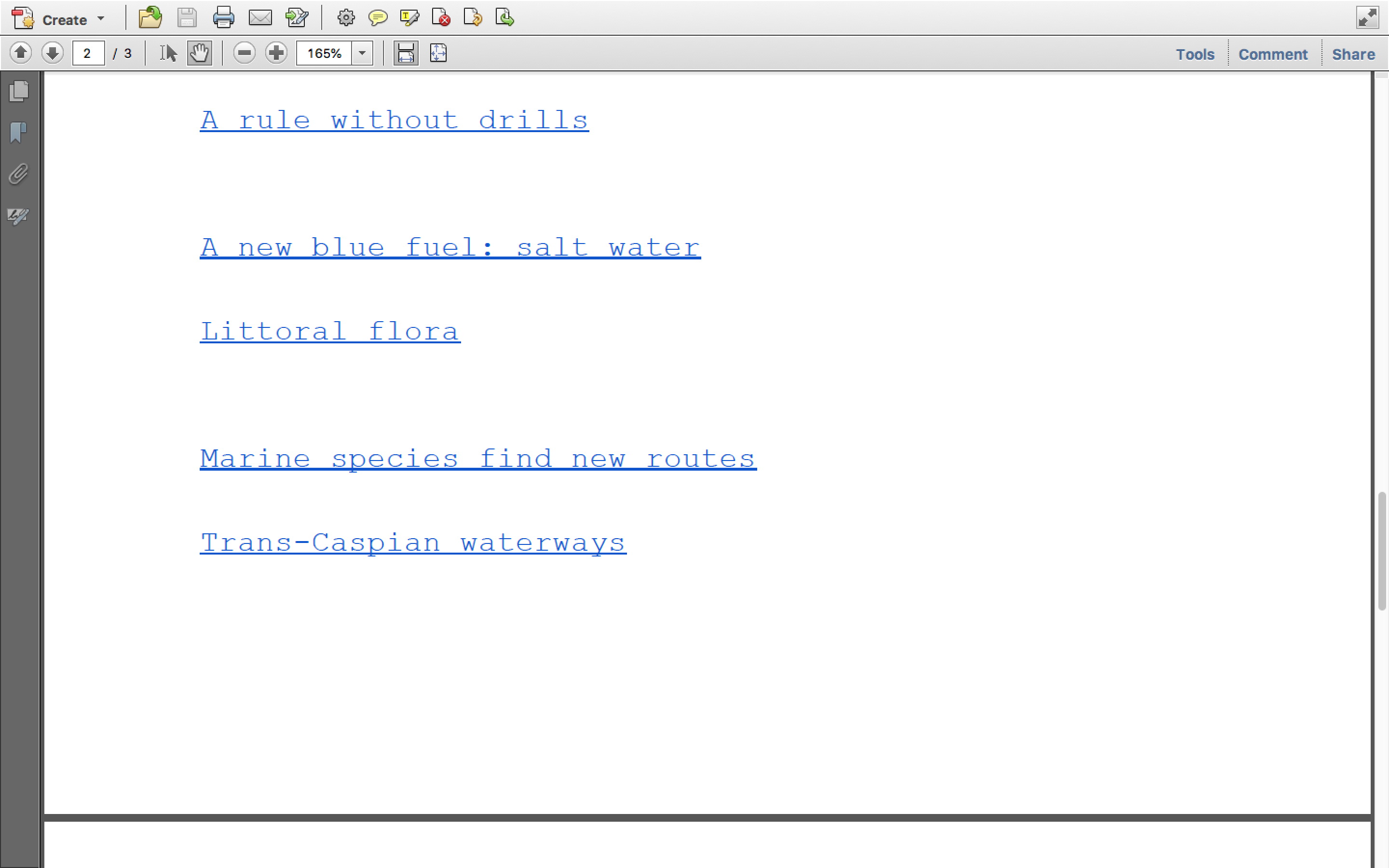
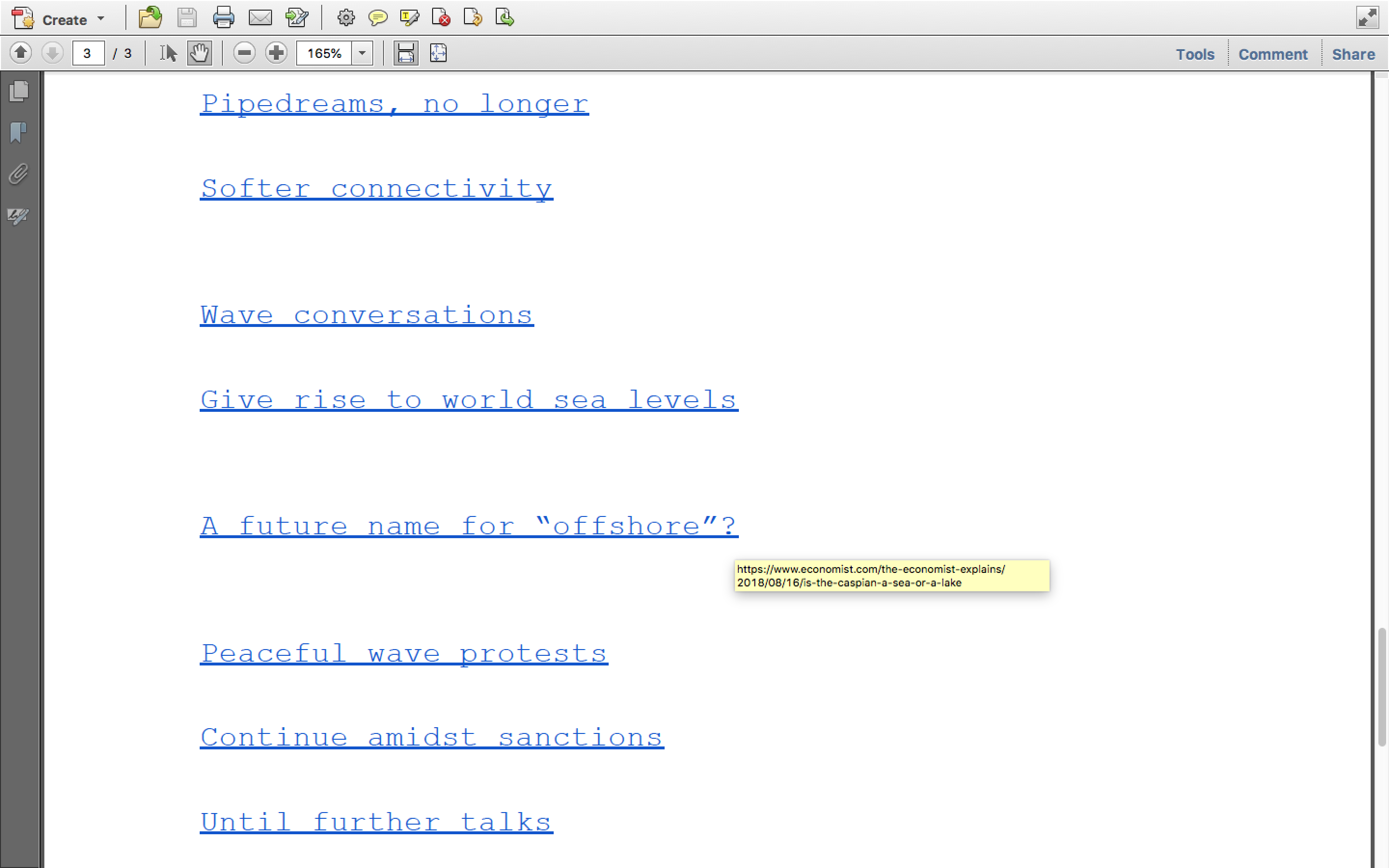

Law of the Sea (2019) is a series of seven hyperlinked tanka poems that form an aquatic revolution manifesto. Presented alongside video works exploring the Caspian littoral, the poems use vocabulary extracted from news articles on the sea, a resource shaped by the legacy of the Russian Empire and contested subsoil interests by its five littoral states—Azerbaijan, Iran, Kazakhstan, Russia, and Turkmenistan.
The poems act as intercepted communiques, a poetic journalistic dispatch that interfaces with the sea's acts of resistance. They simultaneously expose how neoliberal news media frames events through a land-centric, geo-political lens that serves capitalistic alliances, often obscuring such resistance movements.
The work imposes the syllabic form of Japanese tanka. Refined in Japan's Imperial Courts, tanka was a tool of social life and etiquette, used for intimate communication between lovers and expressions of loyalty to the emperor. It was later mobilised in the 20th century to rally support for military expansion. Today, its image is sanitised into a global symbol of harmony with nature, a soft power that actively obscures this violent imperialist history.
This imposed layering exposes a shared operational failure of ordering systems: just as the tanka’s serene aesthetic elides its violent past, the UN Law of the Sea’s framework proves structurally incapable of challenging real-world power, ultimately serving those who already hold it.
The intercepted sea communiques offer a new counter Law of the Sea. The poetic reports speak of the emergence of new ‘nautical continents’ and incoming ‘wave protests,’ inverting the land-centric logic of extraction and imperialism.
• • •